Here, we tackle the grand question - what actually influences behavior and performance?
Cognitive Characteristics
#1: Intelligence Quotient
- Fluid intelligence is the capacity to reason, solve novel problems, and think abstractly, largely independent of acquired knowledge. It normally peaks in early adulthood and typically declines thereafter.
- Crystallized intelligence refers to the accumulation of knowledge, skills, and experience—like vocabulary, general information, and domain-specific know-how. It continues to grow well into late adulthood.
- Fluid intelligence provides the foundational reasoning power that enables the development of crystallized intelligence over time—fluid intelligence essentially facilitates the acquisition of crystallized knowledge.
- Training interventions: Working-memory tasks have shown short-term gains in fluid intelligence, but meta-analyses suggest limited or no lasting or generalized effects.
- Takeaways:
- Higher IQ typically leads to higher performance (but depends on the type of work)
- Those high in fluid intelligence are likely to be better at solving novel problems (typically younger members of a population set)
- Those high in crystallized intelligence are likely to be better at solving issues dealing with intersectionality problems (typically older members of a population set)
#2: Rationality Quotient
- Rationality in cognitive science typically has two parts: epistemic (forming accurate beliefs) and instrumental (making choices that advance goals/expected utility). IQ tests index against individual processing efficiency and knowledge, but they miss key components of rational thinking (e.g., probabilistic reasoning, susceptibility to cognitive biases, actively open-minded thinking, etc.)
- RQ (Rationality Quotient) is an attempt to measure rational thinking directly. This measurement is operationalized via the Comprehensive Assessment of Rational Thinking (CART). CART covers: probabilistic/normative reasoning (base rates, expected value, Bayesian reasoning), avoidance of “miserly” processing (over-reliance on fast intuitions), detection/override of biased responses, and mind-ware (the rules/knowledge needed for rational inference). RQ is related to but distinct from IQ.
- Takeaways:
- Rational thinking is distinct from, but complimentary to, intelligence.
- Rationality can be developed by targeting cognitive control and reflective processes.
- Rationality can be measured but the assessment requires careful design.
#3: Mental Complexity
- The constructive-developmental theory frames adult growth as successive “orders of mind” that change what leaders can take as object (actively reflect on and shape) vs what they are subject to (embedded in). In organizations, higher orders (Self-Authoring → Self-Transforming) enable leaders to hold multiple systems/identities in view, navigate paradox, and redesign norms—core and critical capabilities when experiencing volatility or managing stakeholder complexity.
- Deliberately Developmental Organizations (DDOs) operationalize this by building practices that surface assumptions (“immunities to change”), use real-time feedback, and turn daily work into developmental curriculum. Evidence from adjacent leadership research shows that increasing vertical capacity (identity/meaning-making complexity) is linked to broader spans of leadership behavior, faster competency growth, and better performance in complex settings.
-
Takeaway: design for heat, hold, and head: create stretch (“heat”) assignments, strong "holding" environments (psychological safety with accountability), and structured sense-making ("head"); these conditions predict competency growth and better complex decision-making. Additionally, measure vertical shifts, not just skills: pair standard competency/360 feedback with developmental diagnostics to detect changes in meaning-making that precede behavior generalization.
#4: Emotional Quotient
-
Emotional Intelligence (EI) refers to the ability to perceive, understand, regulate, and use emotions effectively, both in oneself and in others, to guide thinking and behavior. Emotional Quotient (EQ) is a quantifiable measure of EI, typically assessed via ability-based tests (e.g., Mayer–Salovey–Caruso Emotional Intelligence Test, MSCEIT) or self-report trait-based measures (e.g., Trait Emotional Intelligence Questionnaire, TEIQue).
-
In workplace and leadership contexts, high EI/EQ is consistently associated with stronger interpersonal communication, conflict management, transformational leadership behaviors, and team cohesion. Leaders with high EI tend to foster trust, psychological safety, and adaptive performance under pressure, which directly impacts employee engagement and organizational performance.
-
Workplace/Leadership Applications
-
Talent Selection: Incorporating EI assessment into leadership hiring typically predicts better performance in roles with high interpersonal demands.
-
Leadership Development: EI training improves leader adaptability, empathy, and conflict resolution skills, which in turn increases team trust and productivity.
-
Change Management: High-EI leaders manage resistance more effectively by recognizing and addressing emotional responses to change.
-
Team Dynamics: Leaders with high EI improve team cohesion by managing emotional climates and fostering psychological safety.
- Takeaways:
- Prioritize emotional intelligence in leadership selection and development.
- Embed EI competencies into performance management and coaching systems.
- Build emotionally intelligent cultures for resilience during change.
#5: Personality (Big 5 or OCEAN)
- Openness to Experience (intellect/curiosity): tendency to seek novelty and ideas; linked to cognitive exploration and creativity; robustly measured in modern inventories.
- Conscientiousness (orderliness, industriousness, self-discipline): reliable predictor of performance across domains; meta-synthesis of 50+ meta-analyses shows the strongest average association with performance.
- Extraversion (sociability, assertiveness, positive affect): relates to approach motivation and well-being; broad meta-analysis finds extraversion a fairly strong correlate of subjective and psychological well-being.
- Agreeableness (compassion, politeness/cooperation): supports prosocial behavior and lower interpersonal conflict; shows small-to-moderate links with performance depending on the criterion and context.
- Neuroticism (emotional instability, anxiety): consistently negative associations with performance and well-being; the same well-being meta-analysis finds neuroticism the strongest (negative) correlate among Big Five domains.
- Additional points with strong evidence:
- Measurement matters: Contemporary measures (e.g., BFI-2) provide hierarchical domains→facets, better controlling for biases and improving predictive power.
- Prediction is real but bounded: Aggregated evidence shows Big Five traits are robust but modest predictors of performance; conscientiousness tends to lead, with effects varying by outcome (e.g., academic vs. job).
- Traits can change: Meta-analysis has shown that interventions can shift traits meaningfully over ~6 months (e.g., increased emotional stability, increased extraversion), challenging the “fixed traits” view.
- Well-being linkage: Across 334k+ participants, neuroticism (−), extraversion (+), and conscientiousness (+) show the largest associations with life satisfaction and psychological well-being; facet-level assessment improves prediction beyond broad domains.
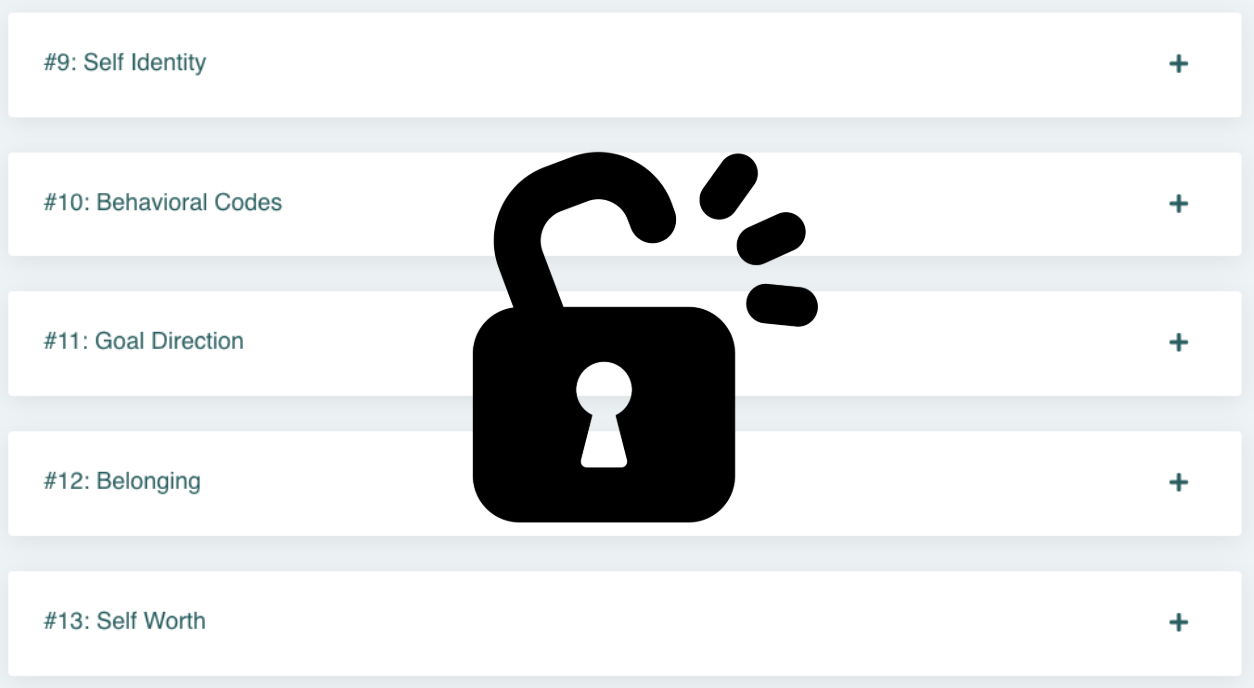
Domain-Specific Competencies
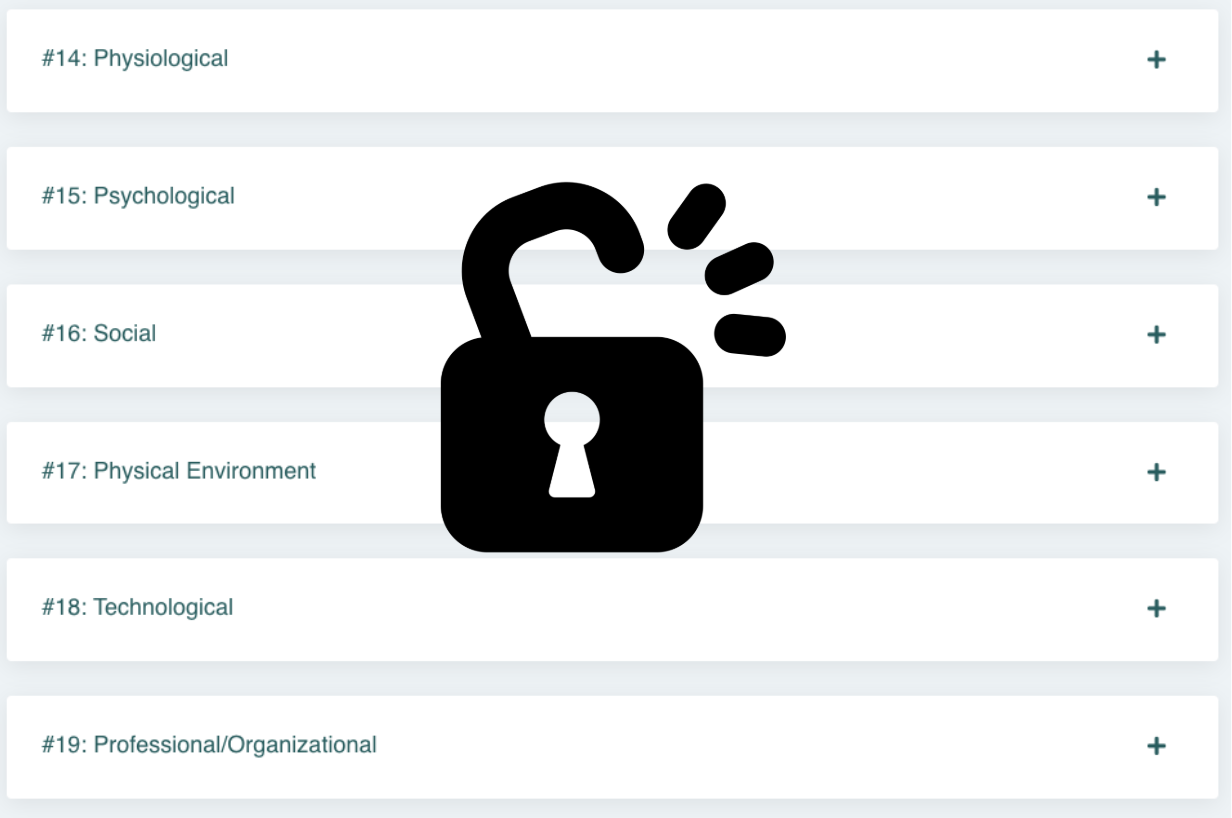
Transient Contextual Factors
Interested in exploring the sources of some of our material? Review our further reading section for a deeper dive into the research with additional actionable takeaways.